Détournement
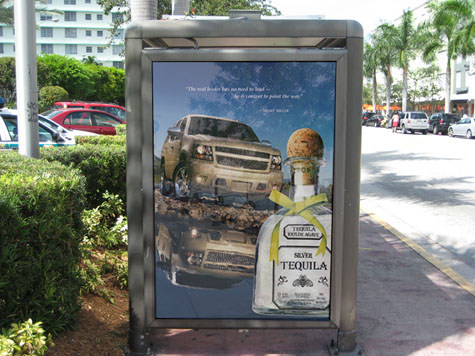
Détournement involves the usage of artistic elements already created for use in other work, using these elements in a new work that gains it's own meaning from the combination of the détourned members, while changing the original meaning of them.
According to Debord, each element used in détournement must loose it's original importance while conferring a new meaning to the ensemble through the organization with the other elements. New meanings from elements that were originally meant to convey some other meaning. In the article Debord says "At this point in the world's development, all forms of expression are losing their grip on reality and being reduced to self-parody." The original meaning is commented on by the détournement, while suggesting a broader interpretation for the images presented as a new ensemble. It is the unification with other elements which had their own original context that creates a new context with the combined ideas. The parts put together add up to a sum greater than the parts counted separately.
The extent to which this kind of détournement takes place in our society now is that it is not only unavoidable, but expected. Nobody is surprised to hear or see artistic elements from the past in new work. And it makes sense. It happens with technology, why not in the art world? Technology depends on the use of previous work in order to advance. Could this mean that art does the same? Debord says, "...the attempts to resuse the "detournable bloc" as material for other ensembles express the search for a vaster construction, a new genre of creation at a higher level." That statement makes me think of technological advancement, each higher level of technology being built on previous advancements creating new levels that are dependent upon the building blocks of the past.