Main | March 2008 »

February 2008 Archives

February 1, 2008

Video Games vs. Books/Movies
mods2.gif


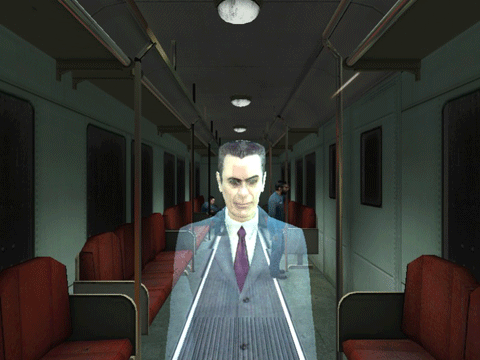
Having never played a video game before, this was so fun. The graphics are the best part. I get so caught up in looking around, exploring, that I forget that I have some sort of mission (although I don't know what it is yet.) But I am also getting stunned mercilessly by the guards as I, way too slowly, begin to figure it out. But I won't be passive much longer. Once I figure out how to run and use (but first find) some weapons, look out!

The main difference, of course, is the interactivity. In books and movies the degree of interpretation is broader, yet the instant gratification that comes with playing games surely compensates for this loss.

One of the best aspects of reading a book is to then see a filmmakers vision and how it is different from that of the reader. And visa versa in seeing a movie and then referring back to the book. Video games are fusing the concepts; presenting us with the story and then allowing our imaginations to take us further, benefitting as we go, with the talent and expertise of the maker of the game.
Art or Not?

art-.gif


http://www.youtube.com/watch?v=HEqDJk8liyE

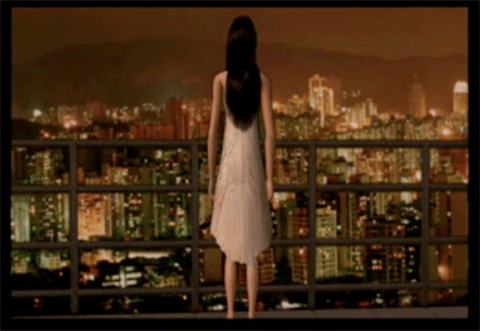
The essential component in defining something as art seems to be in the intentionality. Certainly the makers of many, if not all, videogames could be considered artists in their own right, but it is the act of the self proclaimed artist setting out to create art that assures that their creations shall be defined as such. The videogame itself is a powerful tool that allows an artist to produce a form of expression, whereas the maker of the game was likely merely producing something that would be fun.

Modding itself is a grand form of appropriation, one of the key components of postmodern art. The Sims 2 game, for example, was initially created for entertainment, yet the mod I have included which combines video game technology with music, is an example of the postmodern understanding of art as a desire to create new modes of artistic expression through a variety of mediums.

If art is and always has been, a reflection of the times, then it is only natural and understood that videogames, or more specifically, videogame mods, as well as a myriad of other forms of interests specific to that particular moment in history, would seep into creative expression and have no other choice than be considered true art.


February 13, 2008

Face and Lamp Exercise

Still in progress.
Having trouble being slow on the computer, but also with the saving of the files

Second Life as social reaction

4_001.jpg

If games are, as Marshall Mcluhan states, "ways of adjusting to the stress" of everyday life, becoming models of culture in "how they incorporate both the action and reaction of whole populations in single dynamic image" then I find the online virtual game Second Life interesting from this standpoint.

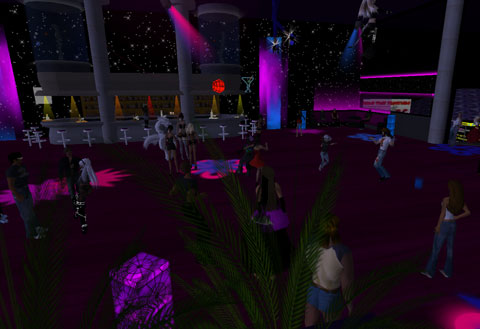
Being a world in which the players are allowed to create themselves into customized avatars, navigating to different, always exotic locals, Second Life is less a world with strict rules than one that takes as Mcluhen writes, the familiar experience and gives it "sudden luminosity." It is real, but not real at the same time, the sort of artificial paradise that Mcluhen refers to. Its most basic appeal is that players can simply eliminate, if only temporarily, some of the things that prevent them from seeing everyday life as more disneylike. Beauty, money, social status, the ability to fly...all of it is possible to alter in Second Life.

Second Life is the sort of game that reflects the players desires and search for meaning. Or at the very least, the sort of escapism they desire at that moment. Players are allowed to anonymously meander through the different environments but with their own voices and thoughts. As a player, they are allowed to be involved yet detached, and as absorbed as any good game demands.

February 16, 2008

Foucault Game/Art

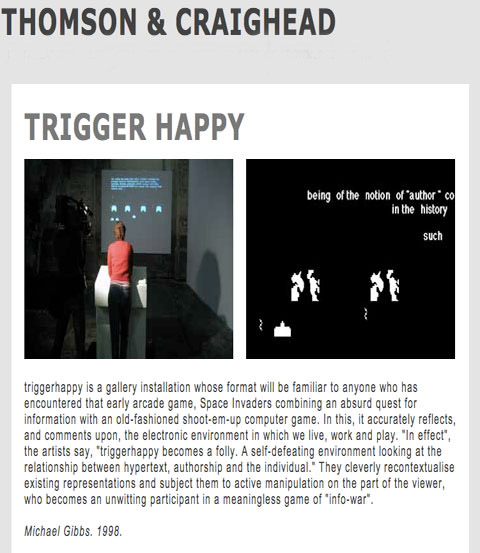
triggerhappy.jpg

In literary studies, Roland Barthes' "Death of the Author" (1968) the author is traditionally invoked as the origin and explanation of the text, or as its ultimate source of meaning. His idea that the "author is tyrannical in that to enclose within the text a single meaning, the death of the author essentially liberates the reader." (Dictionary of Critical Theory p. 83)

Michel Foucault's take on the same subject "What is an Author?" (1969) indicates his lifelong concern with the formation and limitations of systems of thought and the question always asked by Foucault himself is "how have my objects of knowledge and the questions I address to them been produced?" (Dictionary of Critical Theory p. 134) His notions, along with Jacques Derrida, force us to see meaning as unstable, since it is merely a string of unsubstantiated signifiers, truths that have been accepted and passed on, built on a history of unquestioned concepts that have never been examined or deconstructed as fully as they should have been.

So then the author, or in this case, the player, is the ultimate maker of meaning, yet the challenges imposed upon him or her are so complicated that the task is impossible. So abstract and complicated is it to actually win the game is as attempting to find meaning in life, a mere 'folly'.

The self-defeating environment the artists refer to in Trigger Happy refers to the individual's constant attempt to find meaning in an era of 'information sickness' where we are afflicted not so much with an absence of meaning but rather an excess of meaning. The challenge of this game is to remain focused on the quotes going by while trying to survive dropping bombs while simultaneously shooting at them. This game mirrors the postmodern difficulty of sifting through the constant onslaught of information while attempting to make sense of it all.

February 19, 2008

Rave Mod (from Half Life 2)

2rave1.jpg2rave2.jpgrealfinal2.jpgrealfinal.jpg

http://www.ethocybin.com/videos/RaveMovie.wmv


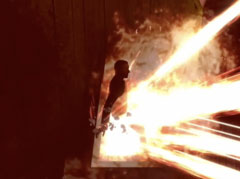
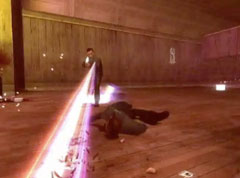
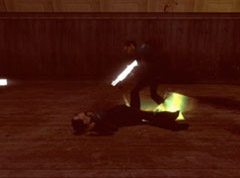
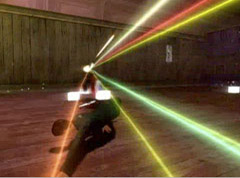
I found this mod interesting because it uses a first person shooter game and combines elements of a
Rave including the music and the drug induced perspective. (Note the glow-light weapons.)

The maker of this mod's inspiration was the basic concept of Quake 3, where he claims,
"amphetamine narcotics play a shockingly large roll." To that end, large ecstasy pill replicas are the
only tools for survival in this game, and his characters expressions were created to convey a
chemically altered happiness.

February 26, 2008

Is Chris Crawford an artist or a technician?

craw1.pngcraw2.jpgcraw3.jpg

TOP 10 SCARIEST VIDEO GAMES
http://www.youtube.com/watch?v=mySDeYuJn2M


Summary of 'The Game Design Sequence' from "The Art of Computer Game Design" by Chris Crawford

1. Choose a goal and topic that gives a sense of the designer artistic vision while establishing the fantasies that will engender it's audience.

2. Research so that it is as authentic as possible.

3. Structure;

a.) Input
b.) Design Structure for maximum manipulatability
c.) Program Structure to allocate memory in an efficient way

4. Pre-programming phase; commit to paper.

5. Programming phase

6. Playtest phase, yielding information in order to polish and refine the game

7. Post-mortem; brace yourself for the critics


Chris Crawford gives us a detailed description of the process of game design that includes both an artistic as well as a technical approach. What seems most clear, however, is that he considers himself not a mere maker of games, but rather a true artist, with all of the requisite sensibilities and values.

Earlier, the question arose; can video games be considered art?

In his conclusion, Crawford implores the would-be game designer to hold true to the purity of their own internal artistic vision, damning the critics and the public. To be noble, according to Crawford, the artist/game designer strives to convey his own sense of aesthetics, his own world view, his own passion. Clearly this is the intent of a serious artist, not a person who considers their endeavors as a mere tool or amusement.

Ultimately it seems that the intention of the artist seems to far outweigh any final product. And by what means do we go about judging said pieces of art? So, if a self-proclaimed artist presents us with what he considers art, whether or not its relevance is in question, shouldn't we, for arts sake, allow that it is? Even if it is "just" a video game?


About February 2008

This page contains all entries posted to Tawnia Rose in February 2008. They are listed from oldest to newest.

March 2008 is the next archive.

Many more can be found on the main index page or by looking through the archives.

Powered by
Movable Type 3.31